Has anyone ever started going to the gym with low expectations? I do have a buddy who genuinely loathes the gym, and he’s decided he’ll forever go once a week. That’s it—nothing more. But that isn’t how we typically approach these things. New Year’s resolutions are filled with extreme optimism about hitting ambitious goals. Product design and product decisions should be the same—particularly today, when it’s easy to throw a product out and just see if it sticks.
The high-expectation customer
Here are some examples of companies that have built for high-expectation clients, and how I believe they think about the importance of the work they’re doing.
Airbnb
Airbnb’s HXC wants to live completely like a local. They may not even own a house, because they’re fully energized by the idea of staying in new places every week—yet still living like a local.
Tesla
Tesla’s HXC treats the car as a piece of software they expect to improve overnight. They want over-the-air updates that add range and features while they sleep, a charging network that makes range anxiety a thing of the past, and performance that rivals anything on a track. Satisfy that person, and the everyday commuter is thrilled by default.
Stripe
Stripe’s HXC is a developer who needs payments to disappear into their stack—programmatic control, clean APIs, webhooks that just work, and a dashboard detailed enough to reconcile a high-volume business at 2 a.m. Build for that engineer, and the small business owner launching their first store gets an experience that feels impossibly polished.
Control at SingleHop
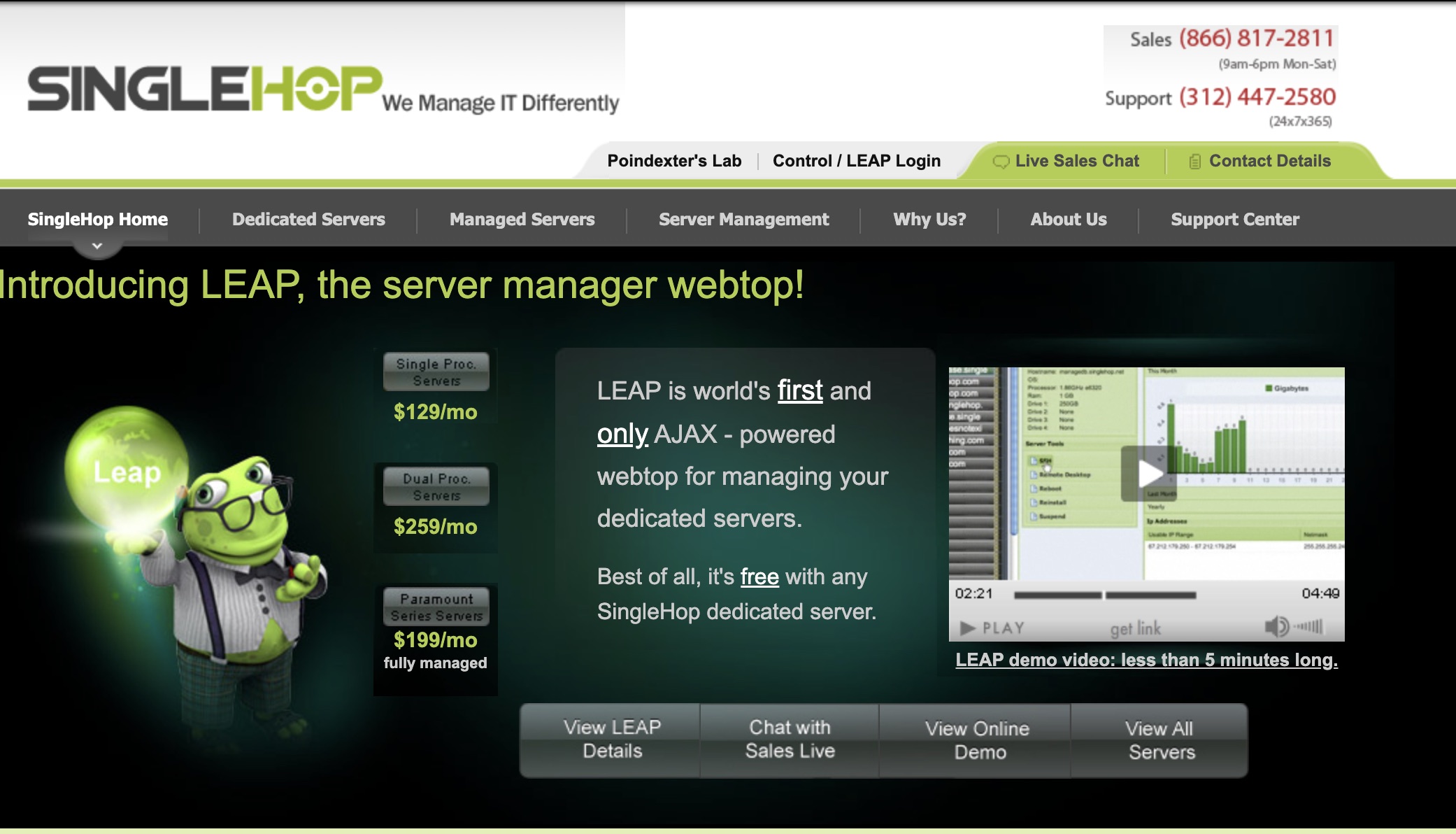
When we were developing SingleHop, we focused intently on control—on giving our clients control over their infrastructure. Our view was that clients needed to be able to control every single aspect of their infrastructure, on any device they used. Here’s a video from 2010 highlighting how we were “Control Freaks” ↗.
Our HXC was intense—they needed control over everything. The thing is, if we could satisfy that client (of which there admittedly were not all that many), we could satisfy the medium- and low-expectation clients, of which there were far more.
At AltExchange, we took the same view. Our clients were analytical nuts. They needed to know everything about the performance of their alternative investments. The truth is, our demographic was older—they rarely logged in—but we more than satisfied them.
The baseline moves
The high-expectation customer’s dream becomes the baseline for everyone else. The high-expectation customer drives innovation in a business, and then it becomes the baseline on which we all depend. Remember when two-day shipping seemed extraordinary? Now, if you wait a week for something, it feels completely ridiculous—like we’re going backwards. Someone with very high expectations brought the future forward, requiring that we have our shipments within hours, as many of us now do.
Interestingly, when it comes to M&A—to being acquired—having a history and a future rooted in serving HXC clients is also wildly important. An acquirer wants to see that you’re fully capable of serving even the most demanding client, even though they will often personally serve few themselves. Often, having these capabilities means you have high levels of automation, or a moat that can be beneficial in other ways.
Why this matters more than ever
AI is making it easier and cheaper to build software every day. We’re entering a period where almost anyone can take an idea, describe it to an AI, and have a functioning product in an astonishingly short period of time. That means the world is going to be flooded with products. Many will be perfectly adequate. Many will solve small inconveniences. And many will struggle to find users who care enough to stick around.
I think one way to avoid that trap is to start with the customer whose expectations are so ambitious that meeting them would genuinely change something. Don’t begin by asking what you can build. Begin by asking who has a vision of a better world that existing products have failed to deliver. Then build for that person.
So don’t set your sights on low- or medium-expectation products.